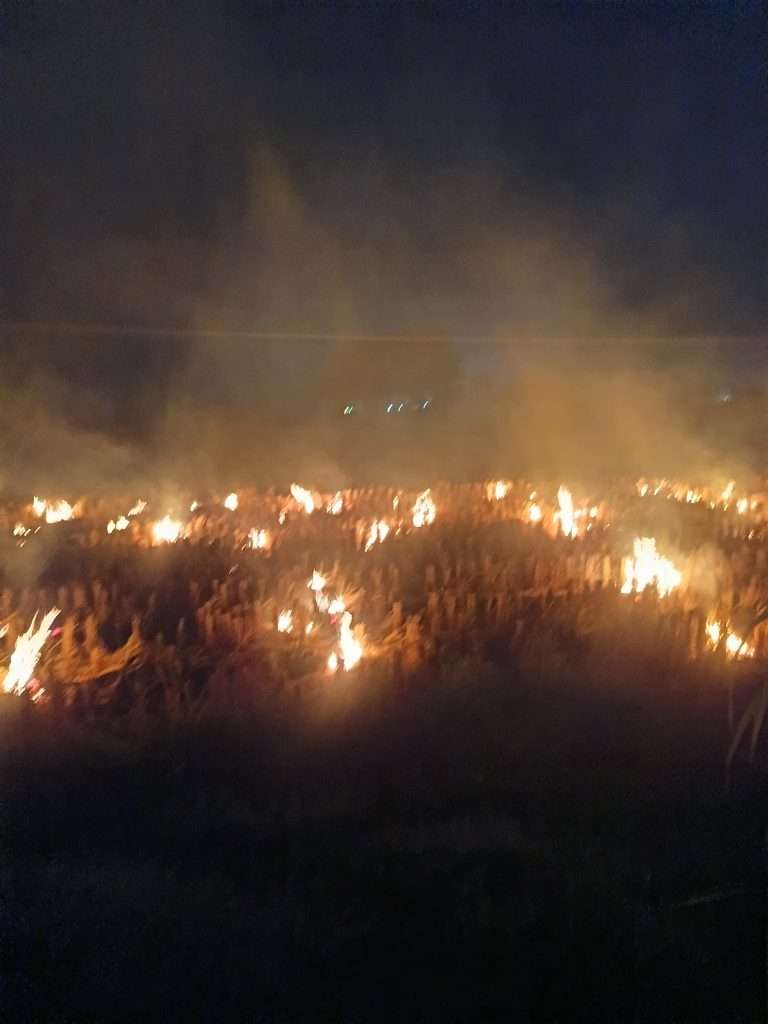
Delhi’s air quality is hazardous today with AQI readings crossing into the “severe” and “hazardous” levels (exceeding 400 to over 500+ across many monitoring stations, and higher on independent trackers) due to a combination of seasonal weather conditions and local and regional emissions. AQI.in +2
Key Causes:
- Crop Stubble Burning: North-westerly winds carry smoke from agricultural residue (crop burning) in neighboring northern states into the National Capital Re
- Unfavourable Weather: Falling winter temperatures and slow, calm winds trap heavy particulate matter (
and PM₁₀) close to the ground, preventing proper atmospheric dispersion.
- Local Emissions & Dust: Ongoing contributions come from heavy vehicle traffic, industrial output, and construction dust, compounded by pre-Diwali festivities.
- Emergency Measures: The Commission for Air Quality Management (CAQM) has invoked GRAP-III restrictions, which include bans on construction and demolition work and limits on high-emission vehicles.
Why the Pollution Spikes Every November
This severe dip in air quality is a seasonal phenomenon driven by a perfect storm of weather and human activity:
- Atmospheric Trap: As winter approaches, temperatures drop, creating a “thermal inversion” layer. With current wind speeds dropping to a sluggish 5–15 km/h (3–9 mph), heavy pollution is physically trapped close to the ground. The India Meteorological Department expects no rain to clear the air until mid-November at the earliest.
- Agricultural & Urban Smoke: The baseline pollution from dense city traffic and factories is heavily amplified by seasonal agricultural burning. Farmers in neighboring agrarian states burn crop residue (stubble) to quickly clear fields for the winter sowing season.